
Description
In response to growing demand for ethical accountability, fashion brands are adopting innovative tools to pull back the curtain on their supply chains. These technologies and platforms empower consumers to see exactly who made their clothes and under what conditions.
In the quest for supply chain transparency, “QR codes” and “digital product passports” have emerged as game-changing tools, bridging the gap between shoppers and the people who craft their clothes.
By scanning a simple code, consumers gain instant access to a garment’s hidden story—from the hands that stitched it to the environmental footprint left behind.
By scanning a simple code, consumers gain instant access to a garment’s hidden story—from the hands that stitched it to the environmental footprint left behind.
How It Works.
Each clothing tag is embedded with a unique QR code. When scanned with a smartphone, it unlocks a “digital passport”—an interactive webpage or app that details:
- Worker profiles: Names, photos, and personal stories of artisans, tailors, or seamstresses.
- Factory locations: Maps showing where the garment was cut, dyed, or assembled.
- Material origins: Sources of fabrics, dyes, or embellishments (e.g., organic cotton from India).
- Sustainability metrics: Carbon emissions, water usage, or recycling instructions.
Why It’s Revolutionary.
- Builds Trust: Concrete data replaces vague claims like “ethical” or “sustainable.”
- Empowers Consumers: Shoppers vote with their wallets by supporting brands that prioritize worker welfare.
- Humanizes Production: Seeing a maker’s face and hearing their story fosters empathy, transforming a generic T-shirt into a personal connection. #
Challenges.
While powerful, these tools require brands to commit to ongoing data updates and protect worker privacy. Not all consumers have smartphone access, risking exclusion.
The Future.
As technology evolves, digital passports may integrate augmented reality (AR) to “meet” artisans virtually or track real-time updates on a garment’s repair history. In the words of a Fair Trade factory manager in Bangladesh: “When customers scan that code, they’re not just buying a product—they’re seeing us as people, not machines.” QR codes are more than a trend—they’re a bridge to a fairer fashion future, one scan at a time. 📱👗
Example 1.
EON’s Connected Products: Luxury brands partner with EON to assign digital IDs to garments. Scanning a coat’s code reveals its journey—from Mongolian cashmere farms to the Milan atelier where it was tailored
EON
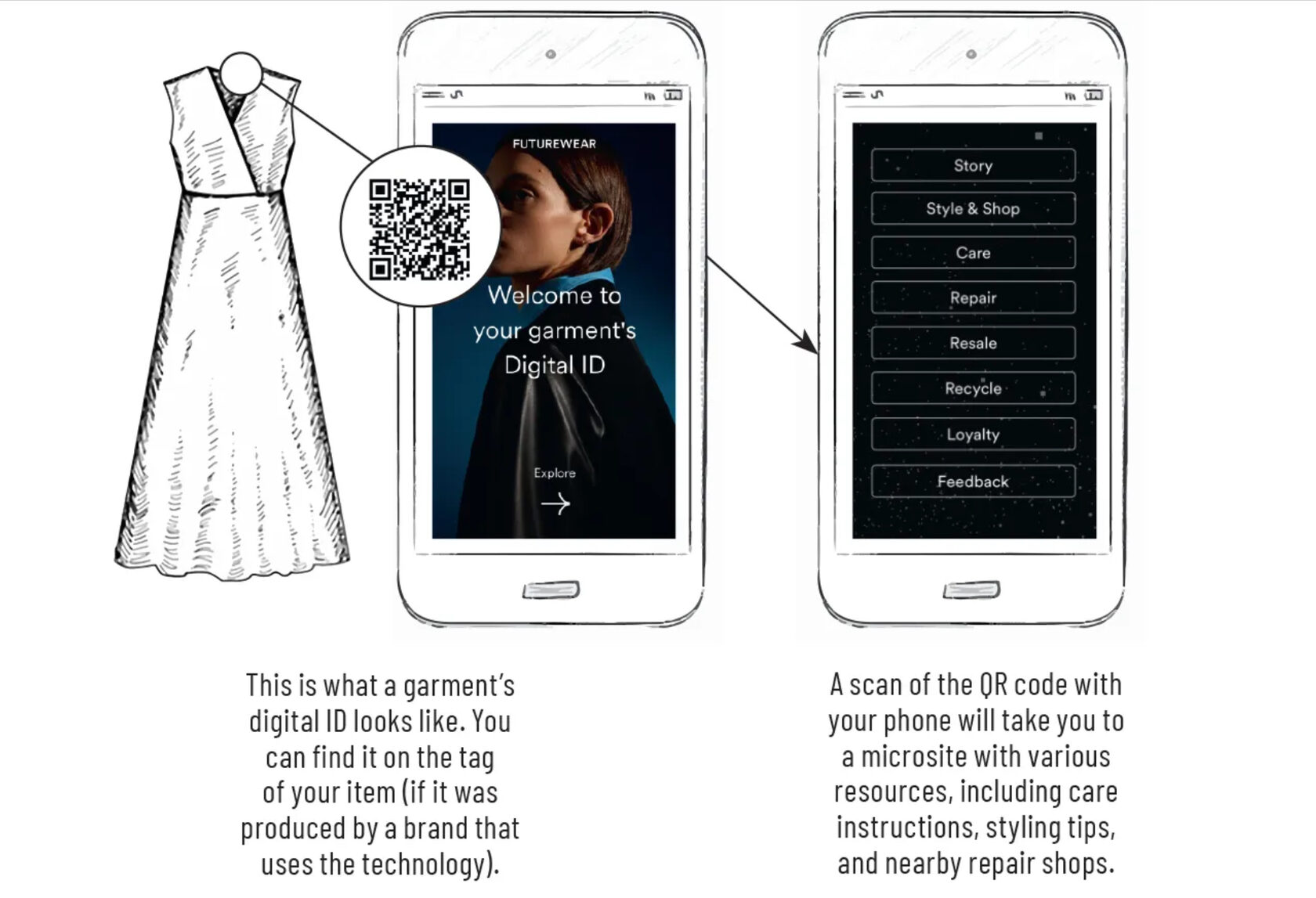
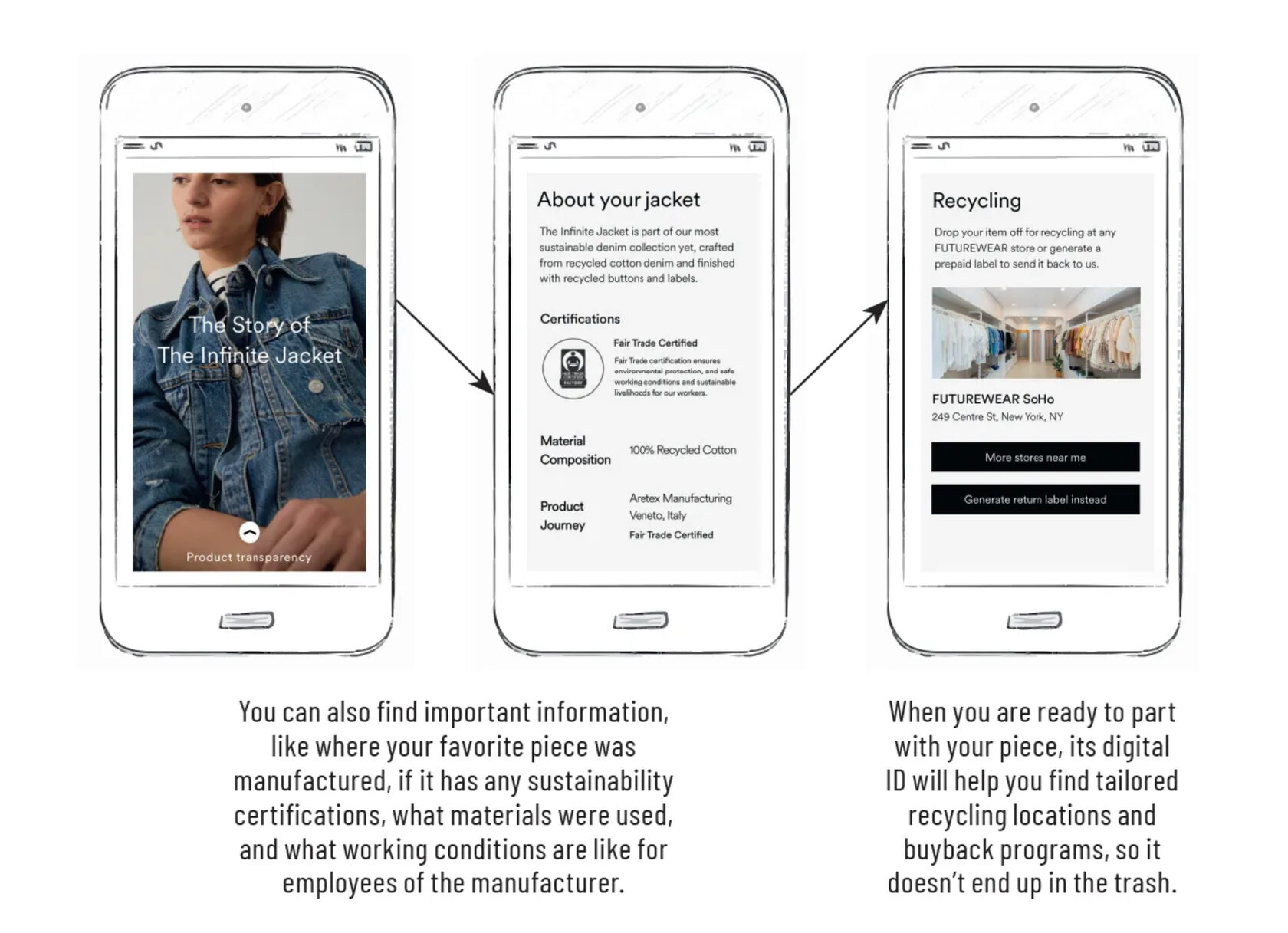
Natasha Franck, the founder and Chief Executive Officer of the software platform EON, saw an opportunity to use clothing labels as a way to add transparency and accountability to the style industry; a solution to help make fashion more sustainable using something that already exists. Her idea was to tag a garment with a unique digital ID in the form of a QR code, NFC tag, or other data carrier that, when scanned, gives consumers important knowledge about their item. Like information about the clothing’s fabrics, supply chain conditions, amount of water used to make the item, and point of sale.
In addition to historical and material information, the digital ID provides consumers with care instructions, repair guidance, and resale options tailored to that specific item, which could extend a product’s life or keep it from getting tossed into landfill. A big problem for the fashion industry, since it’s estimated that 21 billion pounds of textiles produced each year end up in the trash. “A digital ID delivers transparency about that product, where it came from, and what you should do next,” says Franck. That might mean a second or third life for a garment through buyback programs or recycling recommendations. “We need every product and material to be accounted for, so it can be stewarded and managed throughout its life cycle,” she says. “Digital ID is the core enabler of this next-gen world.”
Learn more
Benefits
The Digital IDs include all item information (product name, material, color, etc.) to enable each product to be instantly uploaded to the Rewear platform for easy resell.
- Customer Value: A frictionless resale experience that removes critical barriers
- Brand Value: Increased profits, control and visibility into the resale journey
- Reseller Value: Instantly authenticate, price and process incoming items
- Customer Value: A frictionless resale experience that removes critical barriers
- Brand Value: Increased profits, control and visibility into the resale journey
- Reseller Value: Instantly authenticate, price and process incoming items
Example 2.
Renoon is a platform that helps shoppers discover ethical and sustainable fashion companies. This Dutch startup allows customers to search for sustainable fashion through various parameters such as materials used, carbon emissions, vegan materials, traceability via blockchain, and second-hand items for rent or sale, as well as learn more about brands' sustainability credentials.
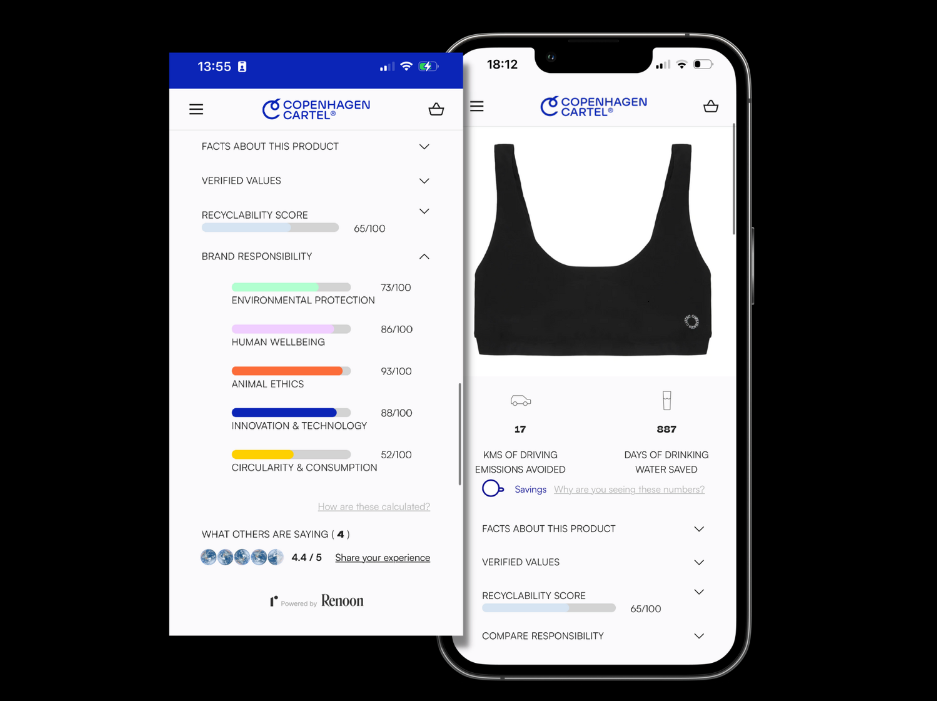
To fight greenwashing practices, Renoon’s patented technology automatically processes the sustainability features and certificates of fashion products sent by retailers and breaks them down on the site, allowing shoppers to browse them based on five categories.
To fight greenwashing practices, Renoon’s patented technology automatically processes the sustainability features and certificates of fashion products sent by retailers and breaks them down on the site, allowing shoppers to browse them based on five categories.
On the platform, this Amsterdam-based startup assesses brands based on environmental protection, human wellbeing, animal ethics, innovation and technology, and modern consumption – the latter category including elements such as slow fashion.
Only garments that satisfy Renoon’s sustainability framework appear on the site. Renoon periodically selects certificates that are indicative of sustainability and implements them on the platform. Among those appear, for example, the Gots, CradletoCradle, B Corp, and Oeko-Tex certificates. The same goes for materials: linen, hemp, and Econyl are among the textiles selected by the platform as sustainable.
“We wanted to create the simplest and smartest way for people to find sustainable options,” says co-founder Iris Skrami, whose idea for Renoon came after struggling to find sustainable clothing online for a party she was attending.
Example 3.
H&M’s "Looop" Initiative: Shoppers scan QR codes to watch video interviews with factory workers in Cambodia, like Sokha, a mother of three who shares how her income helps fund her children’s education.
Example 4.
Maiyet’s Artisan Stories: The ethical fashion brand uses QR codes to link customers to mini-documentaries featuring Kenyan bead artists or Indian handloom weavers, showcasing their craft and cultural heritage