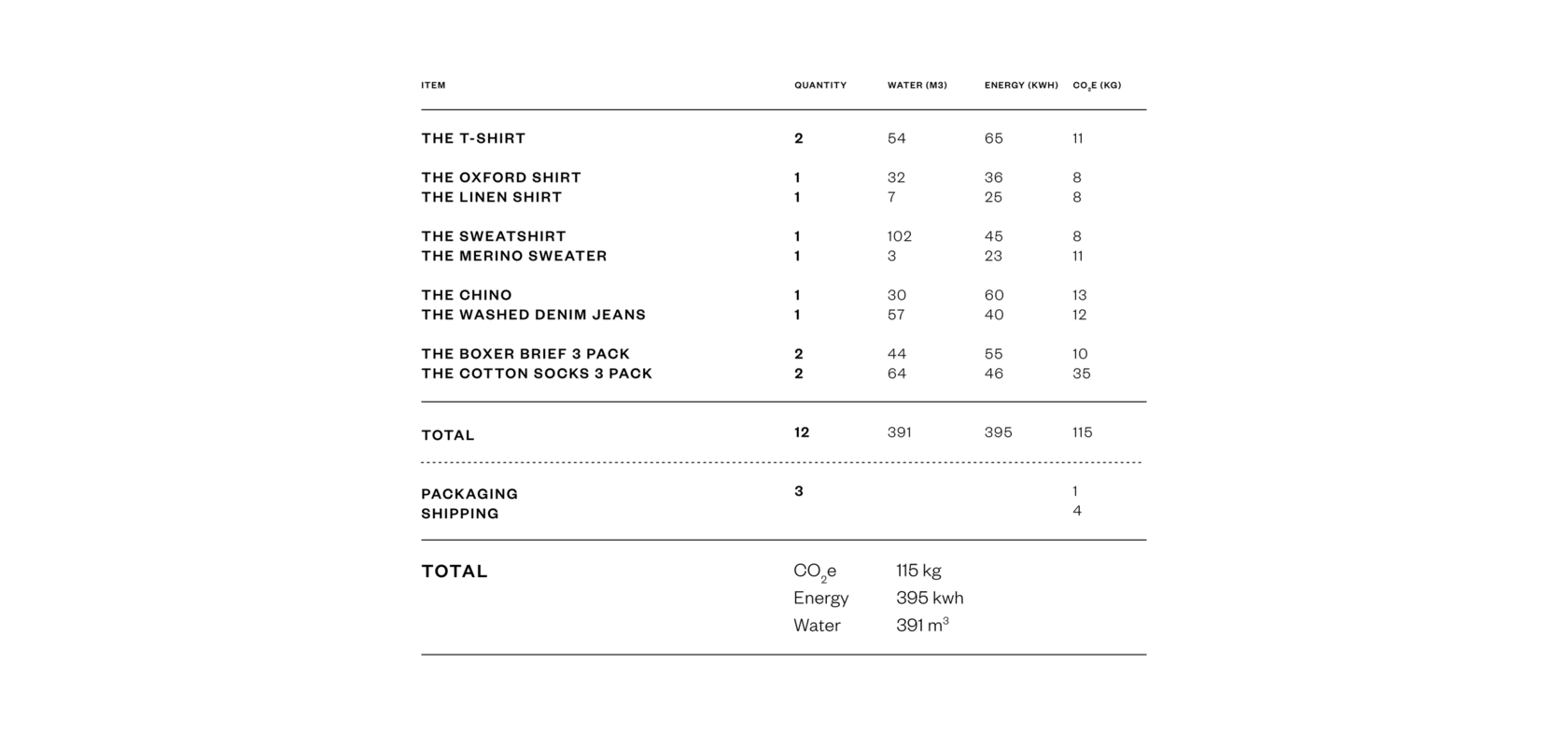
Description
Context
The fashion industry, and our apparel consumption, accounts for more environmental impact than we can afford. Globalized supply chains tap into low-labor cost countries with insufficient labor and environmental regulation, to offer us new outfits for less than a lunch. Unsurprisingly, the low price we've become used to pay, comes at a cost: broken labourers, escalating pollution, frail eco-and biodiversity, resource drought, mountains of trash and climate change. In a bid to meet consumers' increasing awareness that something is amiss, “sustainable” products are flooding the shelves. Not only do they fail to address the issue at hand: we're consuming more than our planet can take. They risk comforting us into consuming even more.
The average European produces 8 tonnes of CO2e per year, when we should be at 2 tonnes to stay below 1.5°C global warming. We need to understand the impact of our clothing to be able to reduce it. Some brands use the knowledge of their traced supply chain to calculate and share with you the environmental impact of all our garments: Their CO2 emissions, water and energy consumption. They show you the impact of their garments, from fiber extraction all the way until finished garment, on every product page.