Description
Lots of different fibres can be organic, such as hemp, flax (linen), jute, silk and wool. However, organic cotton is one of the most commonly used materials in fashion and textiles.
When you choose organic cotton you are helping to build healthier and more financially sustainable communities by supporting organic farmers to create soil that nurtures life, protects biodiversity, and keeps the air and waterways unpolluted.
When you choose organic cotton you are helping to build healthier and more financially sustainable communities by supporting organic farmers to create soil that nurtures life, protects biodiversity, and keeps the air and waterways unpolluted.
What are organic fibers?
- Sustainable: Organic fibres are derived from organic agriculture, a regulated and certified method for sustainable land management. Organic is the only legislated standard for environmentally friendly agriculture, and it is a proven method to contribute to sustainability goals.
- Plant or Animal based: Organic fibers can be plant-based, such as cotton, linen, or hemp, or animal-based, such as wool, silk or cashmere.
- Free of toxic chemicals: Organic fiber production prohibits the use of harmful pesticides, herbicides, and synthetic fertilisers, all of which have been proven to negatively impact ecosystems and/or human health.
- Non-GMO: The use of Genetically Modified Organisms (GMOs) is prohibited in organic agriculture. This is due to potential and demonstrated adverse effects on human and ecosystem health associated with GMOs. Organic fibers are thus derived from agricultural systems that promote biodiversity and support ecosystem functions.
Benefits
- Improved human health: The absence of harmful substances in organic fibre cultivation minimises the risk of health issues that can be caused by exposure to chemical residues, both for the farmers and the end user.
- Enhanced sustainability: Organic fibre production supports sustainable farming practises that promote soil fertility, water conservation, and long-term ecological resilience.
- Enhanced farmer autonomy and resilience: Organic farmers, utilising botanical extracts and natural soil amendments, have less reliance on external inputs (e.g. pesticides and fertilisers). Additionally, necessary crop rotation ensures economic resiliency, and organic fibres are part of organic food systems that promote food security and healthy communities.
Benefits of organic cotton
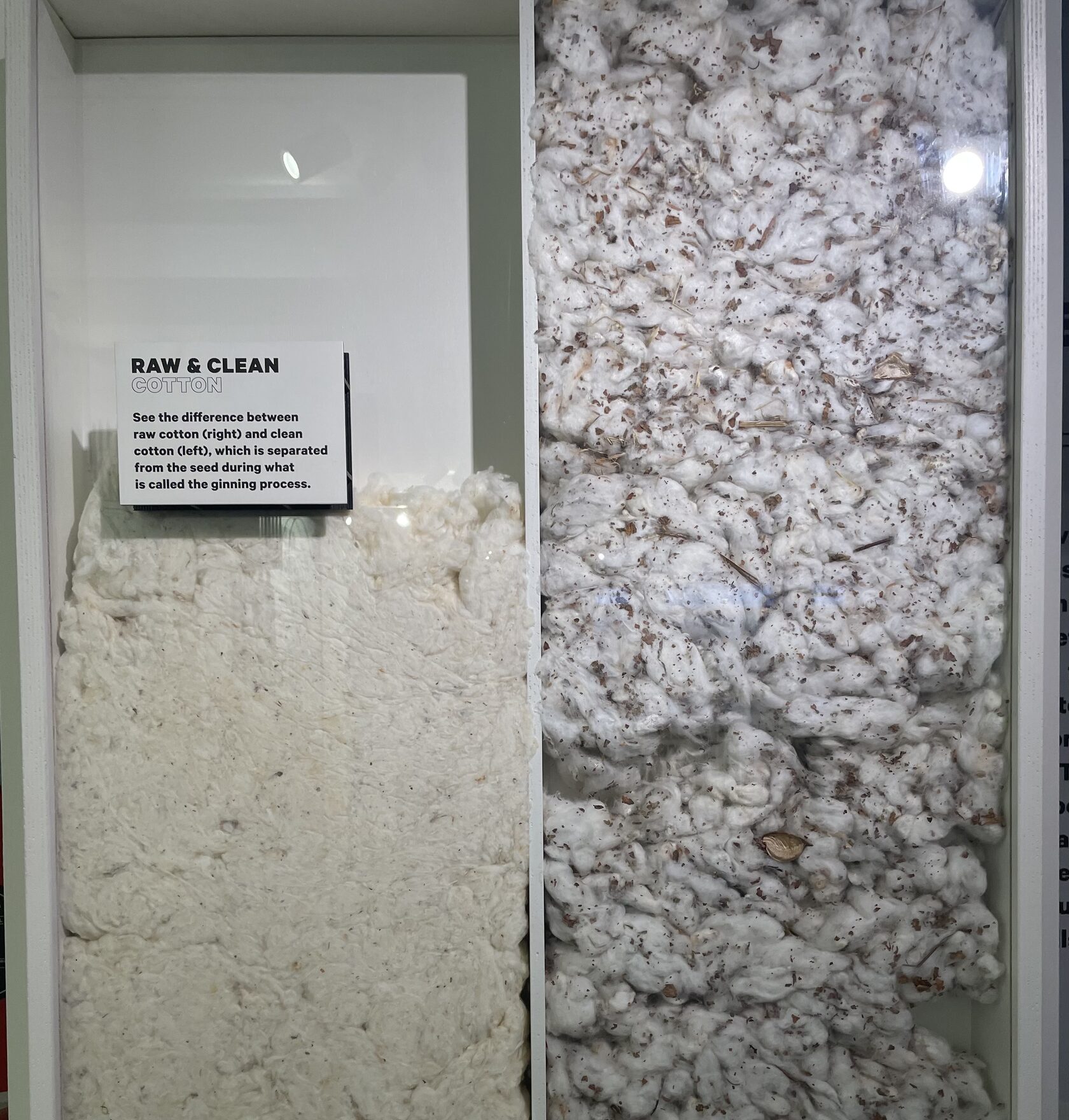
- Low impact — Organic cotton needs 88% less water than thirsty conventional cotton which requires 2,700 litres of water just to make one t-shirt! The energy required to create organic cotton is 62% lower than conventional cotton.
- Regenerative — Organic cotton is regenerative, thanks to its potential to sequester carbon from the atmosphere and improve biodiversity.
- No nasties — Instead of using herbicides and pesticides, organic cotton farmers enlist insect allies, known as beneficials that feed on the pests, leading to a greater crop yield while the beneficials gain a food source. Conventional cotton fields are sterile environments filled with chemicals to fight insects, weeds and diseases. While only 3% of the world's land grows cotton, the sector takes up 10% of the world's total herbicide use and 25% of pesticide use. Farmers using these chemicals are caught in an expensive downward spiral – the more pesticides used, the more resistant the insects become, forcing farmers to apply even higher concentrates.
- Building healthier soil — Organic cotton builds strong soil through crop rotation and retains water more efficiently thanks to the use of manure as fertiliser, increasing the organic matter in the soil. Synthetic fertilisers promote top soil loss due to a predominant mono-crop culture, requiring extensive irrigation.
- Microplastic-free — Entirely natural, organic cotton garments are free from microplastics that pollute our waterways, air and soil.
Certification
GOTS
The Global Organic Textile Standard (GOTS) was developed by leading standard setters to define world-wide recognised requirements for organic textiles. From the harvesting of the raw materials, environmentally and socially responsible manufacturing to labelling, textiles certified to GOTS provide a credible assurance to the consumer.
The Global Organic Textile Standard (GOTS) was developed by leading standard setters to define world-wide recognised requirements for organic textiles. From the harvesting of the raw materials, environmentally and socially responsible manufacturing to labelling, textiles certified to GOTS provide a credible assurance to the consumer.
What SDGs are achieved through this sustainable practice?
100 sustainable practices- here👉
- Do you wish you had a more ethical and sustainable wardrobe, but have no idea where to start?
- Do you want to have less and get more?
- Do you think that a sustainable wardrobe is boring and out of fashion?
- Do you have a closet full of things and still nothing to wear?
- Are you spending money over and over again?
If this sounds like you, then the new guide “Stylish&sustainable wardrobe” will be useful to you.
You can check it right now!